My Health Online
Enhancing patient experience through simplified navigation and usability of high impact features within MHO
Enhancing patient experience through simplified navigation and usability of high impact features within MHO
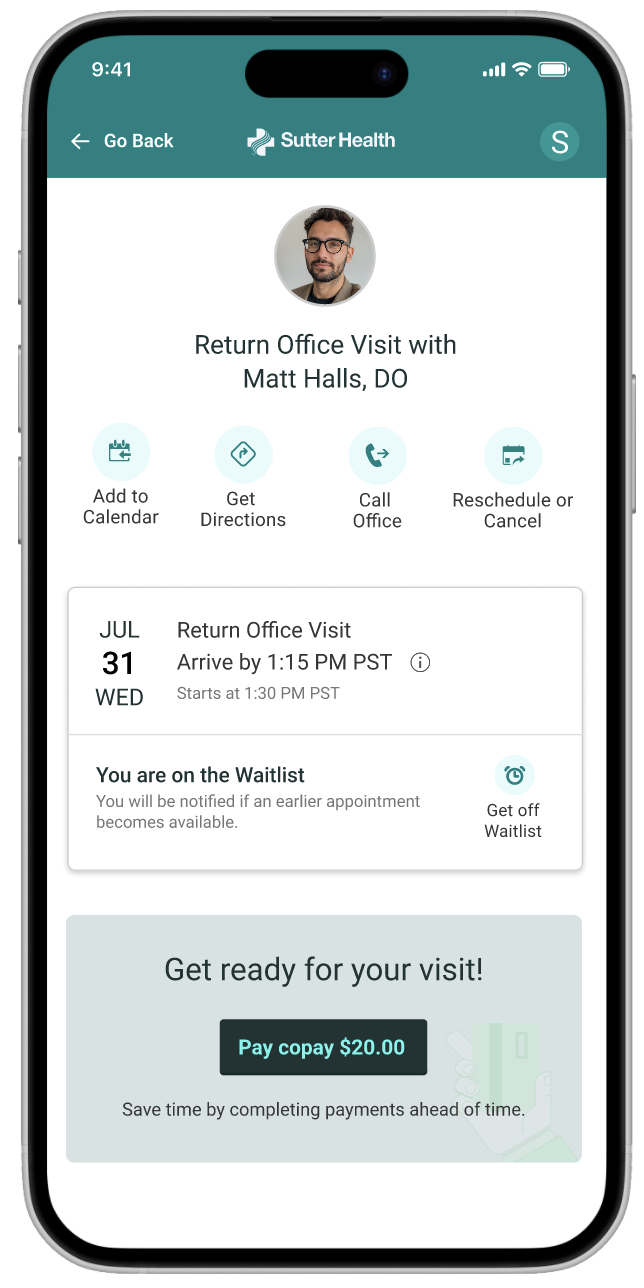
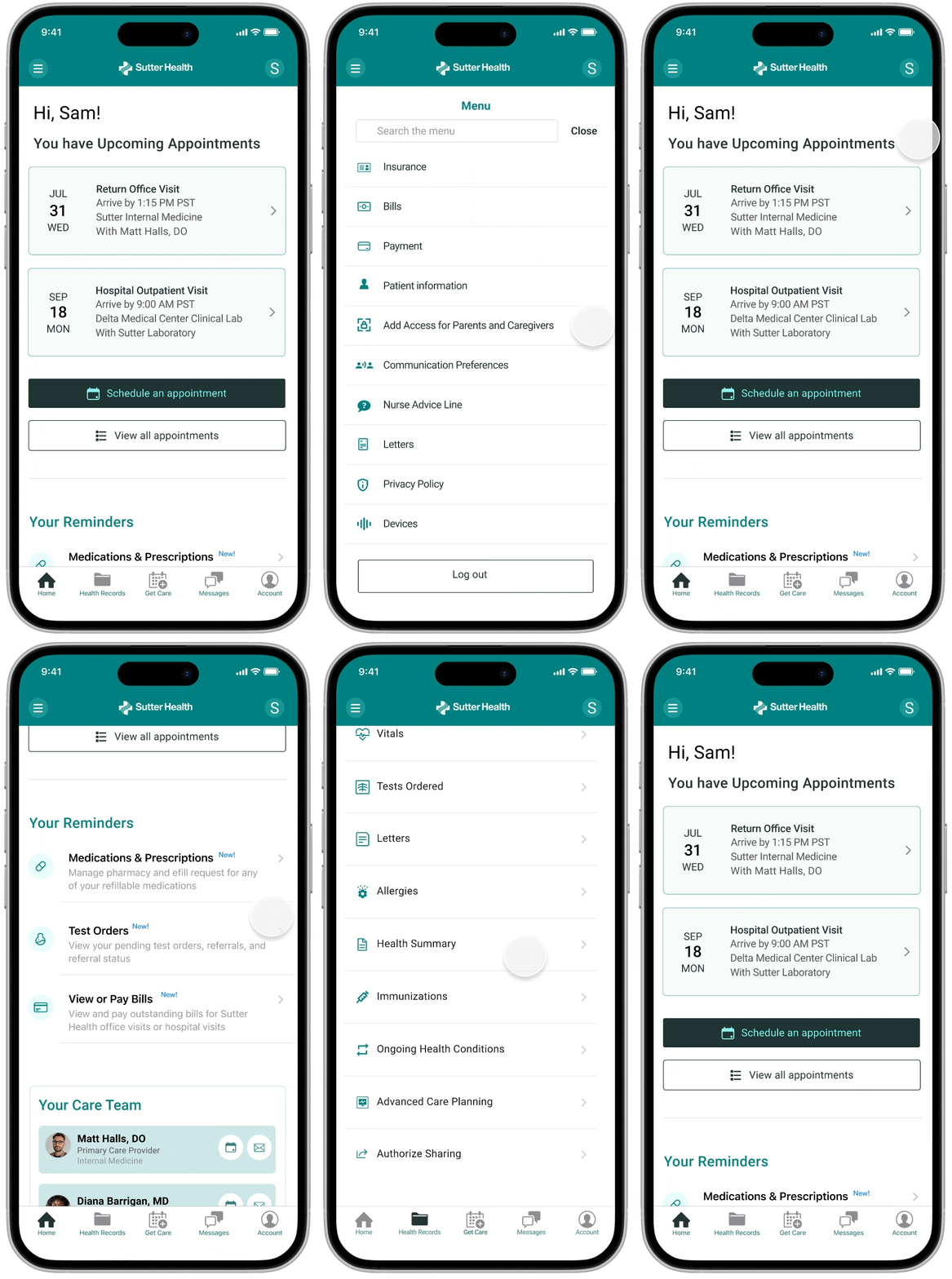
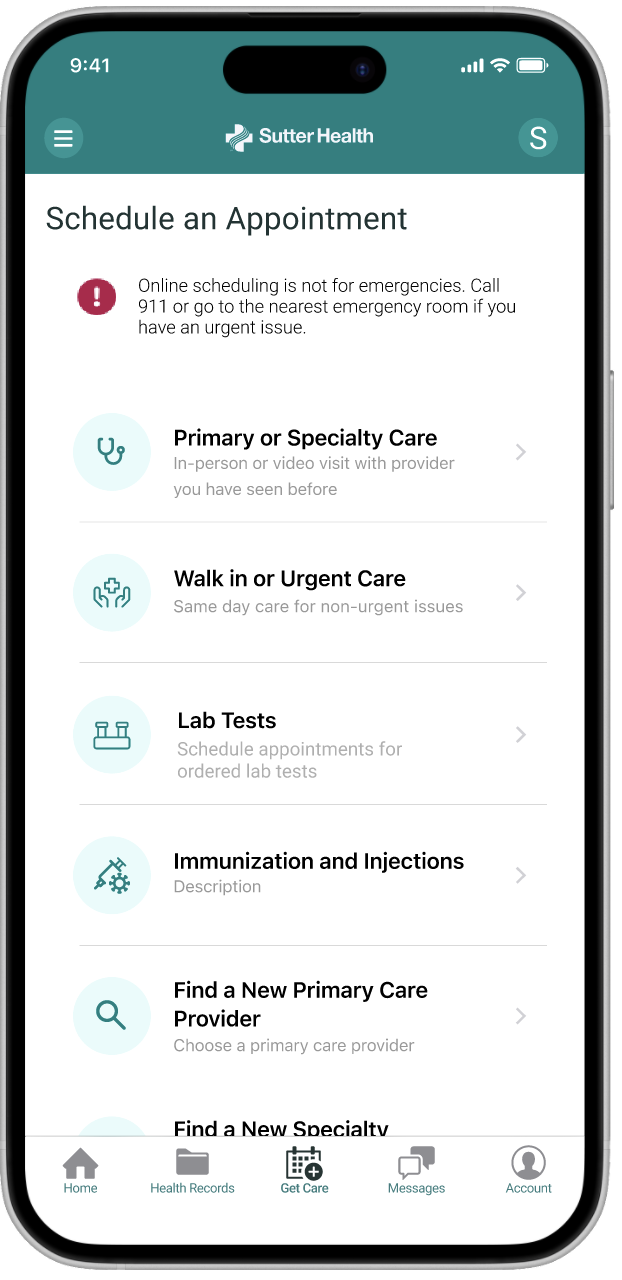
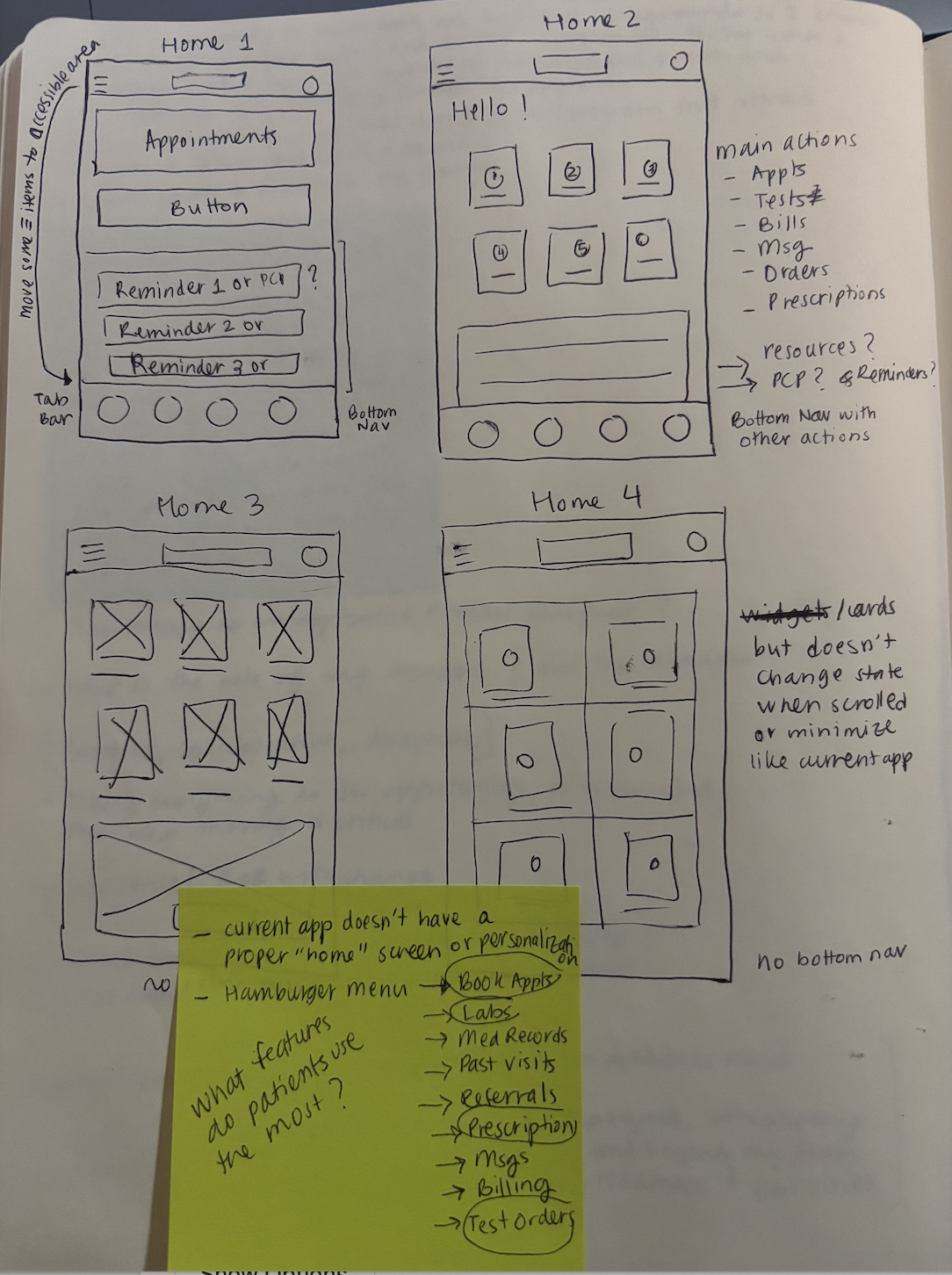
Patients using the MHO app struggle to find key features like scheduling appointments due to buried navigation. This confusion lead to missed actions, user frustration, and added burden on hospital staff who must follow up manually.
Increase patient engagement and reduce operational inefficiencies by improving navigation and usability of high impact features within MHO, particularly scheduling appointments.
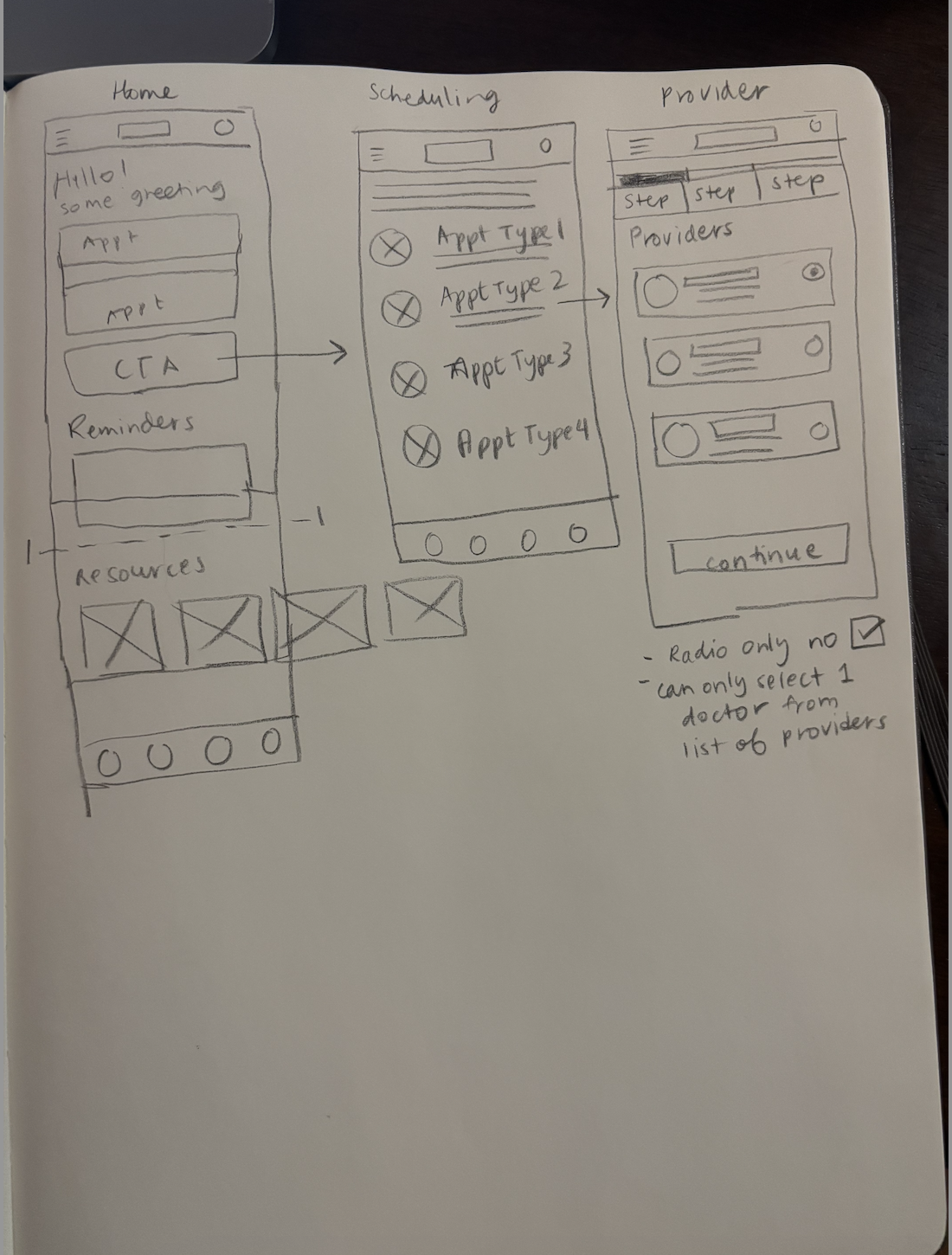
I led the design to improve MHO app's navigation experience. This included identifying usability gaps, analyzing competitive patterns, gathering stakeholder and user input, and designing prototypes that reimagined key task flows like scheduling appointments, all within existing platform constraints.

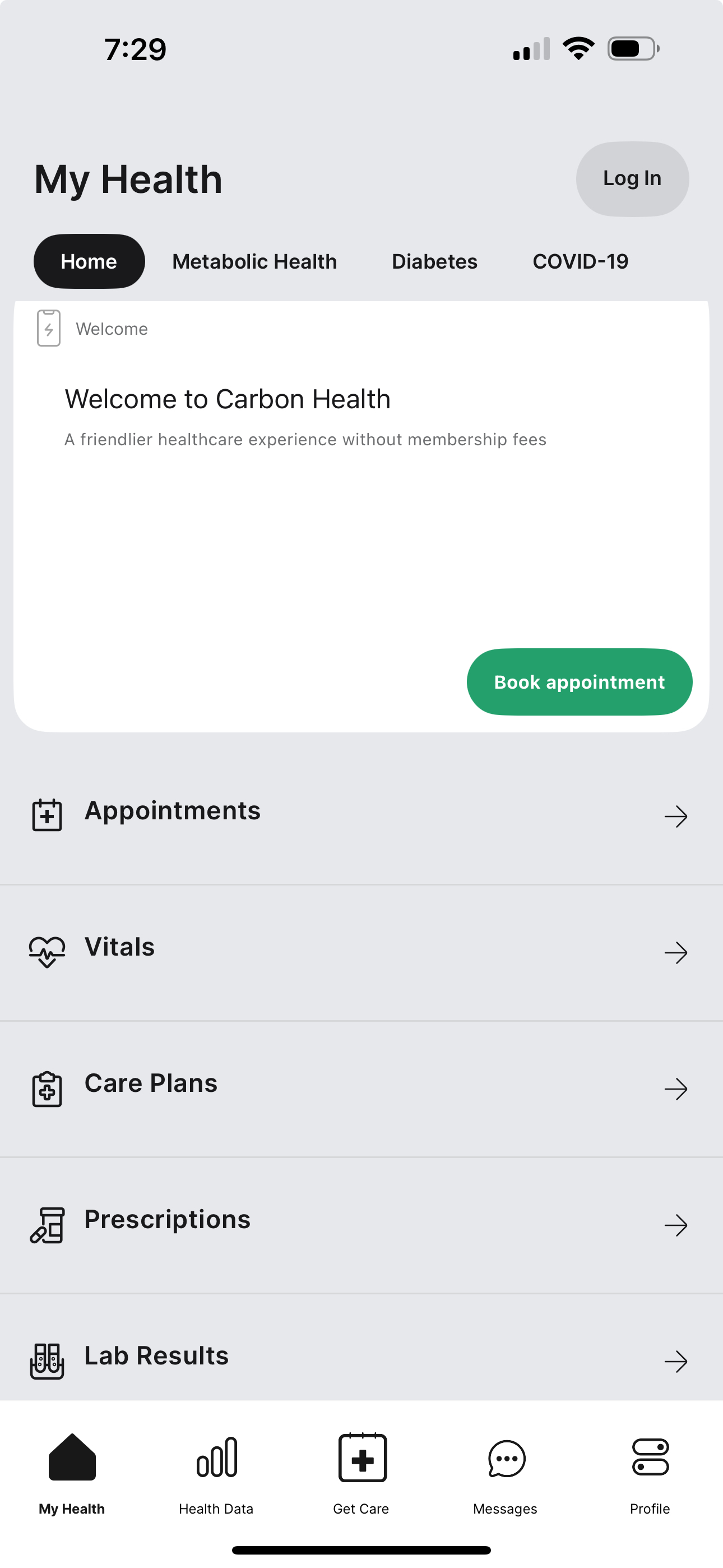
The main challenge with MHO was unclear labels and buried navigation. Unlike competitor apps where core actions were prominent and easy to find, MHO patients couldn't easily recognize or access essential features, making important tasks like scheduling appointments frustrating to complete.
With multiple usability issues across the app, I needed to identify which problem would deliver the greatest impact for both patients and the organization. Through user research/analytics/stakeholder interviews, I discovered that appointment scheduling was both the most frequently used feature and the biggest source of user frustration, making it the clear priority.
%402x.svg)